


Back in April, Zach Bragg posted his résumé on LinkedIn hoping to get exposure and land a job in sports media. The graduating senior’s post went viral, getting over 1,280 shares, 8,000 comments, and 1.4 million views.
Despite…
How going to the Moon became the all-purpose yardstick not for accomplishment but for failure on Earth.
This is the 24th in an exclusive series of 50 articles, one published each day until July 20, exploring the 50th anniversary of the first-ever Moon landing. You can check out 50 Days to the Moon here every day.
You’re currently in a job you don’t like, but you need to perform brilliantly to be noticed and move on to the next opportunity. It’s a bit of a catch-22. In some ways, this is precisely the time for you to be a model employee…
A vacation is meant to be a time away from work, but most Americans can’t seem to let go. A study from the career site Glassdoor found that 66% of Americans work on vacation. Staffing firm Randstad US found that 53% of employers expect team members to reply to messages while on paid time off.
Danna Greenberg, professor of organizational behavior at Babson College, says successfully navigating work/life balance is different for every person, and the question of whether or not to work on vacation isn’t black and white.
“I have worked with some individuals who find checking email at a set time every day helps them stay on top of general issues and avoid the stress of returning to work on Monday morning with a flood of emails and to-dos,” she says. “Some individuals enjoy using part of their vacation time to think about big, strategic issues, to read articles or books related to work, or to think about their professional development.”
When deciding whether or not to bring work on you trip, Greenberg suggests asking yourself these three questions:
- Am I working on vacation because I am afraid my team or colleagues won’t do the work well enough if I am gone? “If the answer is yes, this is a red flag of micromanagement and means you need to change how you manage your team,” she says.
- Am I working on vacation because my boss or client won’t give me the space to separate from work? “If the answer is yes and working on vacation is creating stress, then you need to think about how to renegotiate or change the expectations work has for your availability,” she says. “There is great research available about the negative impact on our work productivity of a 24/7 culture that can help with resetting these unrealistic expectations.”
- Is working on vacation detracting from my ability to relax, recharge, and spend time with people or explore a new place? “Part of the reason for vacation is it opens our eyes to new places, new people, and new ideas,” says Greenberg. “It gives our minds and bodies a break and enables us to return to work in a more positive state. If the answer to this question is yes, then the vacation is not worthwhile time away and the person needs to think about shifting the type or amount of work they are doing on vacation.”
What kind of work you can do
If you decide to bring work, it helps to know what type will be least intrusive, says Michael O’Brien, chief shift officer at Peloton Coaching and Consulting. “You should avoid work that isn’t urgent or important or anything that can take you down a rabbit hole,” he says. “These can wait until you return.”
For better balance, it’s best to set your intentions and boundaries before your vacation, says O’Brien. “For example, I’m going to check email between 7 a.m. and 7:45 a.m. daily,” he explains. “[Say] ‘If there’s a true 9-1-1, call me.’ This clarity not only helps you stay balanced but provides clarity to your family and work colleagues and can help avoid unnecessary vacation drama.”
It’s also important to recognize that vacation is not the opposite of work, but rather is in and of itself, a different kind of work, says Sarah Greenberg, lead coach at BetterUp, an executive coaching firm. “The brain at rest is actually quite active,” she says. “This vacation brain is indeed working for us, just in a different way.” Allowing your mind to wander, for instance, can be helpful for future planning, creativity, and learning.
What kind of work you shouldn’t do
Some kinds of work, however, should never be tackled. “There are inevitably going to be times in which working through a vacation is aligned with our high-level goals,” says Sarah Greenberg. “If I were to generalize, I’d say avoid email, Slack, or any other direct messaging. A classic line I hear is, ‘The vacation was great until I opened my email on day three, and all my work stress returned.’”
Asking if you can work through vacation and keep balance is similar to being asked whether you really need to bring in your car for an oil change once the warning light flashes, says Sarah Greenberg.
“In the short term, you’ll save time by not stopping for vehicle maintenance,” she says. “But if you go too long without a tune-up, you can’t expect your vehicle to last as long, nor operate at its full potential. Vacation is crucial to well-being.”
“Just following up.”
“Did you see my email? [Insert cute GIF here]”
“I just want to make sure you’re not DEAD!”
We’ve all been the recipient of cold-email follow-ups like these. But, if we’…
Mental toughness—the ability to be resilient and focus, make decisions, and function, even in the midst of challenging circumstances or adversity—is a coveted trait among leaders. Marines and Navy SEALS have written books about how to dev…
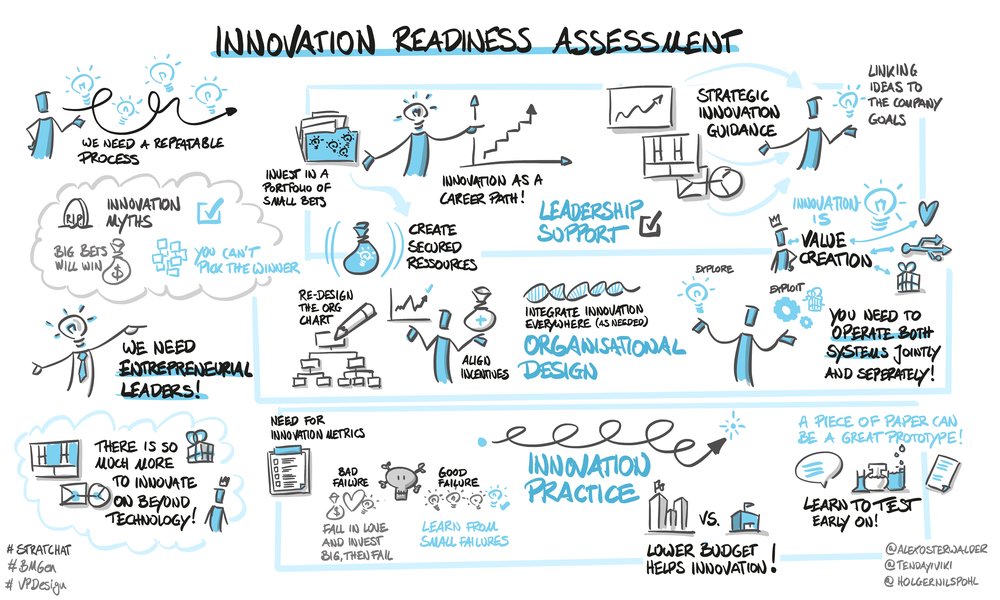
Visual live-drawn by Holger Nils Pohl
As the pace of change in our world has increased, competitive advantages have become temporary. Companies now need to be able to support and nurture innovation – not as one-off projects, but as a repeatable process. Innovation proficiency is no longer optional.
The questions for leaders and intrapreneurs are:
-
How ready is your company to nurture and support innovation?
-
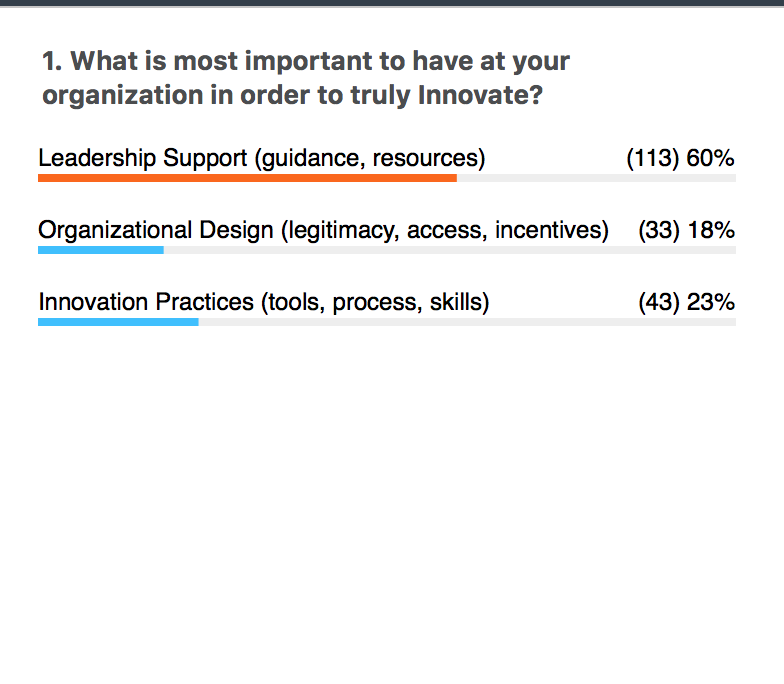
Do you have the right leadership support, organizational design and innovation practice?
In this session, Tendayi Viki, Associate Partner at Strategyzer, Thinkers50 2018 Radar Thinker and the author of The Corporate Startup, joins Alexander Osterwalder in an insightful discussion around how companies can assess their levels of innovation readiness using some of our latest insights from the field.
Enjoy the replay!
Webinar Survey Results:

Creating a video (or video series) to help market your product or service is a no-brainer. It’s an easy, shareable way to communicate your company’s core message. It can also lead to a strong ROI. In fact, product videos increase the chance of a purchase by 144%.
Like many companies, you might not have the in-house resources to create a clip or much time to waste on learning video editing software yourself.
If you don’t have a ton of experience in video production, it may seem like your only options are to pay a lot of money for someone else to do it, or hack together a bad video on your own.
Good news: there’s a third option. Even with limited resources, companies launch with great video campaigns all the time.
To help you build solid, but affordable, content, here are six tips to create a great video.
1. Craft a production plan.
When you enter video production, it’s good to plan as much as possible before you start rolling. This will make the production and editing process flow much more smoothly.
How to do it
Identify your goals and mission for making a video, and then make a plan that aligns with them. Create a script or a storyboard that explains what you will show in your video and what major points you’d like to get across to your audience.
Share this with team members involved in the video so every gets to give feedback and contribute. This will also help your team stay on the same page and track your progress if you’re on a deadline.
2. Showcase your personality.
Whatever it is you’re producing, you’re likely not the first one to do so. The number one marketing challenge you’ll face during launch is standing out from competitors in your field.
What sets your productivity app or hilarious slogan t-shirt or handcrafted eco-friendly wooden rocking horse apart from the pack?
Customers may not want to read your long written explanation about why your wooden rocking horse is more eco-friendly than the others. Visual content is much more digestible, accessible, and shareable to the average person.
Infinite bonus points if you can figure out a way to showcase the personality of your product (or your company, or just yourself) in a way that’s relatable and memorable.
Have you ever made a purchase just because you loved the personality of the brand? Chances are, it was a piece of visual content—perhaps a video—that you instantly connected with because it was just so likable.
Aim to create that kind of video content. If people decide they like you, they’ll show you by becoming customers.
How to do it
Be honest with yourself about your on-camera skills. Is your business partner more charismatic? Put him or her in front of the camera, instead.
Talking into a mic and speaking to an unseen audience may seem easy, but it often isn’t.
Do several takes, upload them all, and edit out awkward pauses. Practice trimming and splitting clips until your transitions look natural.
People love to learn about the personality of a brand by getting a glimpse behind the curtain.
If you’re making a physical product, some footage of the manufacturing process is an excellent way to make your product relatable.
Don’t be afraid to whip out your cell phone if you’re missing a moment, be it putting the final touches on a great-looking product or your lead developer falling asleep at his desk.
Example: Dollar Shave Club
[youtube https://www.youtube.com/watch?v=ZUG9qYTJMsI]
3. Clearly explain your product or service.
Have you ever joked about being married to your work? Like a regular marriage, you’re incredibly familiar with your “spouse.� You know things about each other that no one else knows.
You know your product better than anyone else. That’s great, but you may make the mistake of assuming everyone else knows the ins and outs of your product, too.
Don’t jump right to marketing “Awesome Thing About My Product Number Five,” just because you assume Things one through four are obvious.
Look at your product as if you know nothing about what it is, what it does, or what kinds of problems it can solve. Tell yourself the story of your product as if you know nothing. Then, take that story and tell it to everyone else.
How to do it
If you’re marketing a digital product, it’s time to learn how to create a quality screen capture video. Demonstrate the typical use of your product, but don’t jump right into it—use screen capture to demonstrate a problem or pain point that your product solves.
If the viewer can identify with the problem you’re showing them on-screen, they’ll be much more engaged when you introduce your product. Use repetition, and don’t go too fast.
This is the first time they’re seeing your product in action, and you want to give the viewer the chance to experience the full effect of its genius.
If your product is physical, focus on showing them what your product does and how it can help. Think about demo videos or commercials you’ve seen for popular pieces of technology.
They don’t spend two or three minutes talking about battery life and storage capacity. They use that valuable video real estate to show the product in action, being used as the average consumer wants to use it.
Be helpful in your video, and err on the side of over-explaining. Use captions or video annotations (think Pop-Up Video) to explain anything that isn’t obvious, or use them to supplement your voice over narration.
Example: PadMapper
[youtube https://www.youtube.com/watch?v=eN8nDVGfdZM]
4. Add both entertaining and informational value.
Believe it or not, not everyone will want to sit through your video, even if it is short. Why should they? There are millions of other videos on the Internet, and some of them even have cats in them.
Figure out what value your video is going to offer to your audience. Does it tell a great story? Does it explain how to solve a problem?
Does it give them an insider reward, like a discount code or a clickable link to a free trial? Or is it just three minutes of you ranting into the camera about why non-eco-friendly wooden rocking horses are the worst thing ever invented?
Add some value to your video, and watch it get shared beyond just your inner circle of friends and fellow rocking horse enthusiasts. Believe it or not, most people are altruistic—if they see a clear benefit to be gained from watching your video, they’ll want to share that benefit with their friends and connections.
How to do it
Think back to the last video you shared. Why did you share it? Chances are, if you’re like most people, you wanted to establish your authority on the topic. You wanted to be the first to present that piece of information to the people in your circle. It’s why most content is shared—for the social credibility.
You can give people the social credibility they want by creating smart, informative videos for them to share. If your product solves a problem, present the solution in a way that sounds revolutionary.
For example, if your product speeds up a task that your target customer must perform often, use picture-in-picture editing features to demonstrate how much quicker they can accomplish the task using your product.
It’s great to tell someone that they can save 30 seconds searching for the best rate on their next flight, but if you can show the typical process side-by-side with your innovation, you can actually make them sit through those 30 seconds. It will be excruciating. They will buy your app.
If you decide to go with a more tangible benefit such as a discount code or a free trial, make it easy for the viewer to get. Put a clickable link right in your video.
Don’t tell them to go to another website (or do anything else at all). They won’t do it, and you’ll lose that opportunity. Keep it simple if you want your videos to convert leads.
Example: Moov
[youtube https://www.youtube.com/watch?v=3Ef95nAHFAs]
5. Tell a story that engages the customer.
Think back to high school English class, when you learned about the components of a story—there’s an introduction, conflict, climax, and resolution. If you leave out any of these crucial parts, you’re left with a collection of sentences that have been smashed together for no apparent reason.
Not only should you tell a coherent story (and this will require some pre-planning, writing, and editing), but you should make sure it goes somewhere. A nice, tidy ending is great, but building suspense is better. Are you going to produce another video to continue the story? If so, why should your viewers be excited to watch it?
How to do it
You thought this would be all visuals? You’re going to have to write. If you don’t plan your story, it won’t materialize out of the ether. Make a plan for your video content, and look beyond video number one.
Rather than one explainer video, is your product suited to a series of instructional videos? Can you help people create something with your product? Break that “something� into pieces, and create a series of short videos.
You can even record the entire series in one go, and use an easy editing tool to break the footage out into logical sections. Keeping your audience waiting for more (as long as it’s great content) is an excellent way to stay top-of-mind.
If you’re more of a storyteller, you can keep a video series looking cohesive (and cut down on your workload) by reusing clips.
Remind your viewers of the product benefits you explored last time, and build on the story you’ve already told. Just be sure to store your edited video somewhere safe—the cloud is your best bet—so you don’t have to repeat all your hard work each time you make a new video.
Even if your story doesn’t end at the end of the video, that chapter does. Make sure you leave your viewer with something concrete to do.
There should be a call-to-action at the end of every video, even if you set an expectation that another video will follow. You never know when a viewer will disengage from your content, so give them opportunities to become a customer or subscriber while you have their attention.
Example: WatchSuperFoods
[youtube https://www.youtube.com/watch?v=GFY3d6Fzstc?list=PL2D79C50253A53EE5]
6. Title and promote the video.
You’ve created a great piece of video content that showcases your personality, explains what you’re doing, has a clear benefit, and tells a great story. What do you do next?
It’s time to promote the heck out of it. We don’t have to tell you why you want to do this step. We do, however, want to help you do it well.
How to do it
The best way to ensure people watch your video is to give it a great title.
After Google, YouTube is the second-largest search engine in the world. You put a ton of research and consideration into your landing page titles—do the same for your video, or your clickthroughs will be dismal.
The same goes for your description and tags. Try using hashtags in your title to ensure you’re getting found with the right keywords. You’re also going to want to put some time into selecting the right thumbnail for your video.
This is all the potential viewer will see before they decide whether or not to hit the “play� button, so make that one image extra-compelling.
Export your video to more than one platform. Some people watch on YouTube, some might prefer to watch Facebook. Don’t limit yourself to one platform, or you’ll miss out on a huge number of potential viewers.
If you’re interested in filming videos for platforms like Instagram, check out these great examples for inspiration.
Making Marketing Videos
Regardless of the topic of your video or your amount of resources, be sure to follow these simple, but vital best practices when making a marketing video:
- Clearly explain your service or product, as well as why it might be valuable to the customer. For example, if you sell a technology, you should use this video to explain what this technology does and why it might save a customer time and money. You could also use this video to show a demo of the product.
- Be sure your video looks professional. Film in a properly lit environment with low background noise, if any. If you work in an open office, move your production into a quiet conference room or hallway. If the lighting is poor and it effects how the film subjects are seen on screen, try moving around lamps, or consider purchasing an affordable light at a home-goods or hardware store.
- You don’t need to buy an expensive video camera, but try to use a lower-priced video camera, a digital camera that takes video, or a newer smartphone for a crisp image.
- Hold your film device on a tripod or another surface to limit shakiness. Nothing ruins a great video like an unprofessional, unsteady image. Too much movement can also cause blurry visuals as a camera tries to auto-focus.
- Use a video editing tool to put the video together so it looks clean and professional. When it comes to finding software, there are plenty of affordable options. Some computers, like Macs, already come with an easy-to-use program called IMovie. Once you settle on the technology you’ll use, check out this guide to editing Youtube videos.
- Export your finished product in high-definition. Exporting to HD allows your viewers to see a crisp clean image, rather than a blurry one, on most devices. Here’s a quick guide to editing Youtube videos.
That’s it! With these tips in mind, you can market your business like a seasoned video producer. Go forth and convert!
Want to learn more about video marketing? Download WeVideo’s guide on Tips For Creating The 6 Most Common Business Videos.

There are three major competing Quantum computer technologies for qubits. They are nitrogen-vacancy (NV) centers in diamond lattices, trapped ions, and superconducting qubits. The benefit of…
[[ This is a content summary only. Visit my website for full links, other content, and more! ]]


Sign In with Apple is yet another manifestation of Apple’s commitment to consumer privacy as a brand.


