


General Motors is ordering a return to office by remote workers, starting with three days a week.
As more companies and industries dip their toes in the metaverse, a healthcare company explains how they are using gaming platforms to develop physical and mental therapies.
The post Healthcare turns to the gaming industry to build its metaverse appear…
Shareholders, consumers, and the public expect companies to get serious about the threat of climate change.
Learn about the tech trends that changed the world with the Time Capsule: Trends in Tech, Product Strategy course.
The post Tech history fans will love this time capsule course appeared first on TechRepublic.
Alibaba Cloud announces its commitment to push for more global partnerships with technology innovations and fiscal incentives.
The post Alibaba Cloud releases new products and pledges $1 billion to boost global alliances appeared first on TechRepublic.
Now you can see your institution’s fraud and security risks in a new way, with LogicGate Risk Cloud. Read our review here.
The post LogicGate Risk Cloud: Product review appeared first on TechRepublic.
A few years ago, not long after she took the helm of Amazon Studios, Jennifer Salke pitched an idea that she thought could set Amazon apart as a streaming destination. Salke envisioned an ambitious flagship series that could spawn local spinoffs and satellite shows to draw in a global audience across countries like India and Italy. But she needed to recruit show creators who could take that format and run with it—which led her to the Russo brothers, who had directed multiple wildly successful Marvel movies.
“My brother Joe and I have had an amazing relationship with Jen Salke for many years now,” Anthony Russo said during a panel at the Fast Company Innovation Festival on Thursday. “She called us one day and said, ‘Hey, I have this idea that I want for a show.’ And she goes, I don’t know what it’s about—but this would be the concept.’”
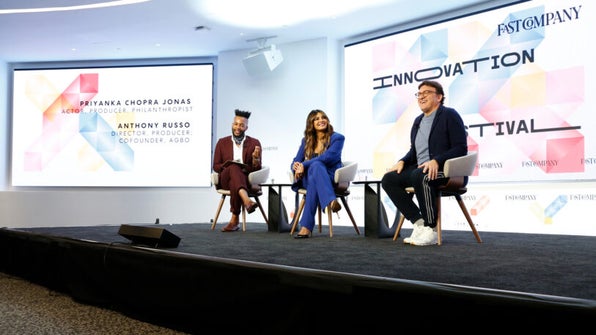
The result is Citadel, a sci-fi espionage series created by the Russo brothers and starring Priyanka Chopra Jonas, who also appeared on the panel. The series—which is reportedly one of the most expensive television productions of all time, second only to Amazon’s recently released Lord of the Rings prequel—is set in the near future and centers on a global spy organization called Citadel that Russo describes as “a defender of humanity.” (Chopra Jonas plays one of the top agents at Citadel, alongside Richard Madden of Game of Thrones fame.) “This agency ends up coming in conflict with a new rival agency that has been developed by the world’s elite to sort of protect their self-interests,” he added. “So it’s a global struggle between these two competing points of view about what humanity should be.”
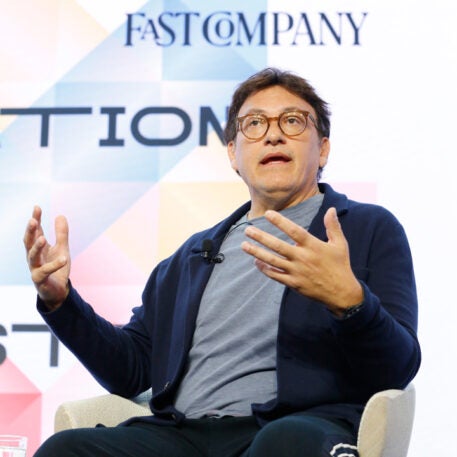
The project is an extension of the “universe storytelling” that Russo and his brother are already doing through their production company AGBO, which grew out of their experience with interconnected narratives in the Marvel Cinematic Universe. For Amazon, however, Citadel is a big bet—and an opportunity to gain significant market share as the largest streamer in the country after Netflix. Amazon already has more than 200 million Prime subscribers across the world (though about 150 million of them are reportedly American users). According to a 2021 report by analytics firm Digital-i, Netflix and Amazon have both seen an uptick in users consuming non-English language content.

Chopra Jonas, who has a first-look TV deal with Amazon Studios and a storied career in Bollywood, was the first name Salke thought of when it came time for casting. Beyond her background in Hindi films, Chopra Jonas is also investing in small budget, regional films through her production company, Purple Pebble Pictures. “When she brought up Priyanka, it was like a light bulb went off,” Russo said. “It was so intelligent and so smart because Priyanka represents the essence of what we’re trying to do with the show. The fact that she’s done such amazing work in India [and] internationally. She has this sort of dual identity—a foot in both worlds.”
It was an obvious decision for Chopra Jonas, who was immediately drawn to the show’s global ambitions. “You don’t have to watch the American show to understand; [the local language series] stands alone,” she said. “But if you watch all the other shows, they’re all connected—and that’s never been done in television. It’s such an interesting experiment, especially for a streamer like Amazon that caters to audiences across the world. To be able to offer a show which cross-pollinates audiences and languages is just so exciting to me. So it was innovative, and that’s what I loved about it.”
The disconnect is leading to paranoia and “productivity theater.”
Trying to do everything yourself is bad for both you and your team.
While a paycheck is important, a lot of people are questioning the exchange of their time for money. According to survey by McKinsey, 70% of U.S.-based employees say their work defines their sense of purpose and nearly half are reconsidering the kind of work they do because of a shift in priorities during the pandemic.
Instead of leaving your current employer to find a job that is more fulfilling, though, it’s possible to find a greater sense of purpose where you are, says Soon Yu, author of Friction: Adding Value by Making People Work for It.
One of the biggest benefits of work is that there is meaning attached to effort. It can be learning something, teaching something, or getting better at something and being able to demonstrate mastery. A lot of the reward of a hard day’s work is knowing who you helped, how you moved the business forward, or what you proved to yourself today. Often, these times are predicated on periods where you faced adversity and overcame it.
While companies are realizing that they have to provide opportunities for professional development, mentorship, and career progression, employees can and should start asking for it. How you approach your request, however, will likely impact your success.
How to Frame the Ask
Don’t plop the request in their lap, says Ken Coleman, author of From Paycheck to Purpose: The Clear Path to Doing Work You Love. “You could create a little bit of unnecessary tension, even if you are ultimately helping your boss,” he says. “Instead, you can be like a lawyer in a courtroom and lead them along the path to what you’re actually asking.”
Do this by casting a vision. Coleman recommends showing hunger that is wrapped in humility. For example, “I’m grateful for this company and the job that I have. I want to grow professionally, and I’ve been looking around in my heart and examining my talents, what I love to do, and what results matter to me.”
“I call this talent, passion, and mission,” says Coleman. “Talent is what I’m good at. Passion is what I love to do. And my mission speaks to the values and results that I want my work to create.”
Next, ask for what you need to get there, such as additional training, new assignments, or added responsibilities. Be sure to connect the effort to the anticipated results, showing your boss what they can expect from you in the future.
“Paint a picture for your boss of what it will look like when you’re using the specific talents,” says Coleman. “You want to add more value to the company. That kind of specificity and vision casting will bring them in as a participant and help get their buy-in.”
For example, you could say, “do you think there’s an opportunity to make a slight adjustment in my current job? I’m spending half my day doing work I love, and I’d like to bump that up to 80%. I believe the additional time I spend on that type of work will generate [this benefit].”
Yu agrees that it’s important that your request demonstrates the added value you will bring to the company. Another good way to frame the ask is to say, “I would like to get better at what I’m doing, but I need help. I’m willing to put in the extra time and effort if you’re willing to help me. I would really like to take a course, which connects to this project I’m working on. I am happy to share what I learn with the team.”
“Your boss would have to be an asshole to say ‘no’ to that, especially if you come in with some concrete things that would help your mastery and your autonomy,” says Yu. “If it’s in their authority, the boss is likely going to give you a trial.”
But don’t ask if you’re not willing to put in extra time and effort. “If you fall flat on your face, the likelihood of you getting the second favor may not be as great,” says Yu.
Meaningful Work is Meaningful to Your Boss, too
Managing employees who excel at their roles and add value to the company will reflects well on bosses. “Now you’re their protégé,” says Yu. “If it’s within their authority or if they can advocate for it or be a champion for it, they’ll try to get you an opportunity to [put] meaningful work into practice.”
“There’s humility [in] saying, ‘I want to bring more to the table,’” adds Coleman. “That’s usually very attractive. What’s happening with that type of posture is that you’re bringing your leader into the equation, and you’re not just saying, ‘hey, I want this.’”


