


During conventional times, there are plenty of resources and suggestions available to help leaders taking on a new role, with onboarding and assimilating to a new team in regular times. Yet this transition is so immensely challenging that studies show as many as 40% of newly appointed managers derail in their first 18 months in a new role.
Now imagine that you were appointed into a new role just before the pandemic hit, so you have to manage greater responsibilities than you’re used to, as well as get things done through people you hardly know yet—and can’t get to know in-person.
You will have to go beyond the textbook onboarding material to stay on your feet, especially while the pandemic continues to affect everyone’s work and life. To help you meet success, consider these four strategies.
Be open to new ways of observing your team’s performance
During a period outside of a crisis, a new boss at our company will acquaint themselves with the team through a listening tour, asking open-ended questions to solicit opinions, and walking around the office to observe people in action. But these days, leaders must be more creative about their preferred mode of gathering information.
An executive coaching client of mine was promoted at the beginning of the year (two months before the pandemic hit) to a VP position leading a multibillion-dollar division of a Fortune 50 company. His plan before the pandemic was to visit his globally scattered teams to develop connections with his managers and gather a clearer view of work on the ground. My client is a visual and kinesthetic learner, so face-to-face meetings are critical for his success.
Suddenly he was forced to manage this brand-new team completely via virtual meetings. Struggling with the inability to observe their work up close, my client began to grow sour about his new promotion, believing that he was destined to fail for reasons out of his control.
Through our coaching, I encouraged him to ask himself: “If I can’t go to them, how is there a way for them to ‘come to me?’”
The executive decided to ask his team to send him packets of photos that would help him get up to speed on their work since he couldn’t visit himself. His team leaders also asked the operations managers on the ground to take short videos of themselves talking about their work and any challenges, similar to an in-person interaction.
The strategy proved helpful. By making this request, my client opened himself up to learning and presented his staff with more autonomy. His team stepped up, and he was able to get back on the learning curve.
Adapt to your employees’ new vulnerabilities
With most colleagues working remotely, leaders must recognize their employees’ vulnerability around an uncertain work-home environment, as well as their hesitance over potentially embarrassing video-feed situations at home.
Some of your new team members may feel uncomfortable when comparing their home spaces, however spacious or otherwise, with their colleagues’ homes. In a related situation, your reports who are parents may struggle to appear attentive and present while their kids run around and their spouses try to work within earshot.
Keep in mind, as a new team member, your team is trying to gauge your leadership style, as well as how they should present themselves in your eyes. These concerns heighten dramatically now as the pandemic is forcing us to expose parts of ourselves that we usually wouldn’t share with all of our colleagues. Maintain flexibility and pragmatism when collaborating.
Check your prejudices around remote productivity
As companies began mandating employees to work from home, I observed something interesting in my work with corporate leaders. The executives who considered themselves introverted loved the policy, while my extroverted clients struggled with it. For these extroverted leaders, their concern was primarily based in a belief system that equated close physical proximity to coworkers with increased productivity.
Since introverted leaders typically flourish when left to themselves, many assumed the same of their colleagues; conversely, extroverts highly doubted how much their teams were getting done, remotely. When I asked one extroverted client why he was constantly texting his team during the day, he responded: “This way, I know they’re not sitting around watching Netflix all day.”
Therefore, when working remotely, resist projecting your discomfort about productivity under these conditions on others, just because you can’t observe them in real time. Monitoring people and mistrusting how they are operating when away from you removes their sense of autonomy and limits their discretionary effort.
Give before taking, and pull before pushing
Every newly appointed leader should work to find time to meet with their mentors and colleagues before big decisions. But this is hard to do because the pandemic has made your colleagues busier, more distracted, and physically distant. On an existential level, the crisis has also reminded people that life is too short to waste on things that seem superfluous right now.
For this reason, to establish yourself for success in a new role, you must prioritize giving value, rather than taking what you need from others. In the past, being pushy or “sales-y” was relatively harmless, but now, it can destroy valuable relationships.
To cultivate influence with colleagues, stop pushing your agenda and start gently pulling them toward you. For instance, if you want to meet with a peer or a direct report, rather than merely putting time on their calendar, try reaching out with a message asking if you can set up a meeting to talk about an issue and why this conversation may be helpful to them.
This is a time when it pays to ask before telling, pull before pushing, and invite before expecting. It’s the only way to attract (and not mandate) others to prioritize you in their increasingly busy life. Your chosen approach will establish you as a worthwhile leader (or not) through the pandemic and any future disruptions your team faces.
Nihar Chhaya is an executive coach to the C-suite and leaders at global companies, including American Airlines, Coca-Cola, Cigna, Cox Enterprises, Raytheon, Lockheed Martin, and more.
Before Teampay was forced to close its Manhattan offices in early March, the company had a lot of the features you’d expect to find at a startup: a healthy snack bar and a much more popular unhealthy snack bar, coffee machines, and comfortable hangout areas where staff would gather for informal conversations.
Each week the distributed spend management software company invited a guest speaker to host a lunch-and-learn. Every other week they hosted a demos-and-drinks night where the engineering team would show off its latest development over beer and cocktails, and each quarter the team would venture off for a surprise team outing.
So when the coronavirus forced the company to send its staff home, CEO Andrew Hoag says he wanted to do what he could to continue offering a similar work experience from home. “We continued the lunch-and-learn and the demos-and-drinks,” he says. “For example, instead of us bringing a catered lunch into the office, we used our product to give every employee a $20-a-week delivery stipend so they could order lunch.”
Teampay also offered staff a $500 stipend to put toward their home office setup and a more flexible work schedule so they could work around family responsibilities.
Since COVID-19 forced many workers out of their offices, employers have had to choose between delivering traditional perks to employees’ homes, abolishing the in-person parts of their benefits programs, or reconsidering their approach to employee benefits altogether. As the world of employee perks evolves to meet the needs of a rapidly changing workplace arrangement, many of these changes are expected to become yet another part of the “new normal.”
Redefining benefits for the COVID-19 era
In a recent study by talent mobility platform Topia, the majority of respondents indicated that empowerment and trust were the most important factors that contribute to a “great employee experience,” followed by job training opportunities and technology. Only 16% of employees indicated that a “cool” office space, including perks such as free food and games, were a priority.
“The pandemic has highlighted an extreme shift in what we are all looking for from a work experience,” says Jacky Cohen, Topia’s vice president of people and culture. “It’s an opportunity to rethink the term ‘benefits’ in general and really think about what companies offer to their employees in the new world of the distributed workforce.”
In recent months employers and HR departments have also been turning their attention toward the perks that employees are more likely to need to get through this turbulent period, says Natalie Baumgartner, chief workforce scientist for employee engagement platform Achievers. “It’s definitely forcing organizations to ask the question ‘What’s most important? Where do we put our dollars? And what’s most valuable to our employees?’” she says. “The things that fundamentally support our well-being need to come first.”
Those perks, according to Baumgartner, include mental health resources, flexibility, and monetary incentives.
Shifting priorities—and budgets
“[Employers and HR departments] are changing their behaviors,” says Baumgartner. “What direction they’re changing depends on the financial viability of their company, the strategic direction—do we need to be literally together moving forward—and just their value system, which drives a lot of these decisions.”
Baumgartner adds that in the midst of an economic crisis many companies have had to tighten their belts and eliminate some of the benefits that they previously offered. For example, many are reducing benefits related to continuing education and employee training in the face of an uncertain economic future. “It was something that was offered by organizations as a massive perk—getting a higher education, going to business school. In many cases that’s gone by the wayside,” she says. “It’s something organizations simply can’t justify in this state of financial unpredictability.”
A reminder of simpler times
While employees are seeking more meaningful perks such as mental health resources and greater flexibility, there is still a demand for traditional perks that can offer consistency and comfort in uncertain times.
Prior to the coronavirus outbreak, New York-based Stadium provided a service that allowed office workers at a company to order food from several different restaurants on the same order, meaning colleagues didn’t have to agree on a lunch spot. Since the outbreak, cofounder and CEO Shaunak Amin has launched another business, SnackMagic, that allows remote staff to receive personalized snack boxes at their home office anywhere in the country.
According to Amin, the custom snack delivery company has doubled every two weeks since its launch just over two months ago. “There aren’t many tools or services that are built for the remote setting,” he says. “Based on the initial interest we’ve seen, I think it’s here to stay.”
While Amin admits that snacking isn’t a top priority for most companies in the midst of a global pandemic, the cost of a few treats is minimal compared to what they would otherwise spend on stocking office kitchens, and the gesture goes a long way. “It makes the employee feel like the employer cares, not just for me but also for my family, because often the kids are picking the snacks,” he says.
New Officemates, New Perks
Another major shift in the delivery of workplace benefits is the intended recipient. Prior to the pandemic, perks were primarily targeted toward employees, with family members occasionally added as a secondary recipient to health plans and other benefits.
“The biggest change we’re seeing with COVID is this understanding that no employee operates in isolation,” says Daniel Freedman, the cofounder and co-CEO of BurnAlong, a digital corporate wellness platform. “That’s the biggest shift that we’ve seen; families are central.”
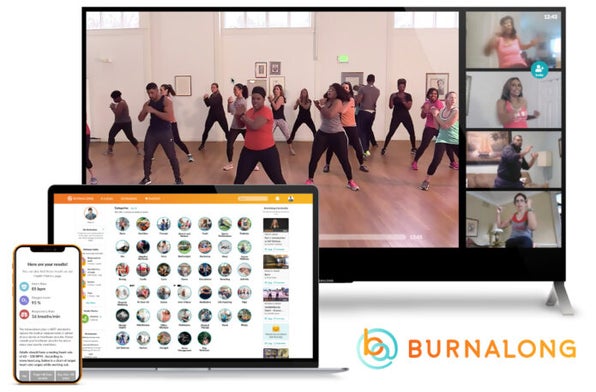
BurnAlong offers a digital platform that allows users to receive one-on-one or group training sessions with hundreds of health and wellness providers, with classes ranging from traditional fitness to mindfulness and meditation to rehabilitation for medical conditions. Freedman says that the platform has doubled its client list since last year, with more than a quarter of all classes now dedicated to emotional support.
“That’s everything from parenting classes, arthritis, diabetes, adaptive workouts for people with disabilities, sleep, anxiety—and this mirrors what you’re seeing with a heightened focus on mental health and loneliness,” he says.
Some of the most popular options are also geared toward nonworking members of the household, such as virtual summer camp programs for kids. “If your spouse, your partner, your parent, your kids are struggling, that affects your productivity. So when it comes to health and wellness, every company is looking at how to deliver programming and support for families as well,” he says. “We even have pet workouts—workouts that people can do with their dogs. It’s all about meeting people wherever they are and with whoever their loved ones are.”
I made a major career change during the largest pandemic in history.
After nearly a decade at Zillow, I recently joined Ethos as their chief revenue officer. I went from helping people purchase homes to helping families get life insurance from the safe…
Years ago, when my wife, April, and I were getting married, we decided to DIY our wedding invitations to cut down on cost. What I didn’t know at the time was that this mundane task of assembling, addressing, and sealing 200+ invitations would te…
Global shift to work from home boosted sales for software and cloud service
Why do some leaders have trouble changing course? The escalation of commitment trap and how to avoid it.
Slack accusing Microsoft of unfairly foisting its Teams collaborative software on millions of users
People at all levels in the workplace say that “we don’t stop often enough to acknowledge what we’ve done and celebrate some of our successes.” Celebration and acknowledgment are the first steps in the continuous improvement…
The face of event marketing is primed for irrevocable change. As our company like many others entered into the events season in the beginning of 2020, there were many indications the landscape would not look the same. However, none of us could have pre…
As states enter later phases of reopening and offices start to turn their lights back on, many changes are in the works to keep employees safe and minimize the transmission of COVID-19. One area in particular that’s undergoing an evolution is co…


