


While it might seem like a non-issue, your pandemic hires may be feeling disconnected and confused.
The post Reorienting your virtual hires for work in the office appeared first on TechRepublic.
Organizations are hiring remote employees in droves. This has made the lives of hiring managers much easier, because doing so significantly broadens the talent pool. Employees seem to enjoy it as well, as it has become an important source of flexibilit…
The difference between introverts and extroverts is how they replenish their energy—introverts by spending time alone and extroverts by being around other people. The pandemic put both groups at risk of burnout, but for different reasons.
“The office environment historically has been set up for the extroverts,” says Mark Simmonds, author of Beat Stress at Work. “When lockdown happened all over the world, suddenly the introverts couldn’t believe their luck.”
Separation from colleagues, family, and friends was more difficult for extroverts in the early days of remote work and self-quarantine, says Andrew Shatte’, PhD, chief knowledge officer and cofounder of meQuilibrium, an employee resilience solution.
“However, by the end of 2020, we saw large spikes in loneliness, and introverts and extroverts were equally affected,” he says. “Burnout occurs when the demands placed on us greatly outstrip our psychological, emotional, and physical resources. Everyone needs social contact to preserve mental wellbeing.”
Connection is a key pillar of belonging, says Dr. Natalie Bumgartner, chief workforce scientist for the employee engagement platform Achievers. “Those who say they have strong relationships at work are 2.4 times more likely to have a strong sense of belonging,” she says. “Even those who are introverted need to feel this sense of connection.”
Social support is an important mediating factor for stress. Extroverts, who typically maintain more connections, had an advantage during the pandemic if they actively sustained those relationships, says Kelly Berte, director, HR Research & Advisory at McLean & Company, an HR research firm. But that advantage comes with another type of risk.
“A counteracting factor is the potential for virtual fatigue for extroverts,” she says. “[They] had to rely on technology-based solutions to foster the same level of social connection as they did prior to the pandemic, in addition to using technology during working hours. Introverts may be more inclined to switch off at the end of the workday.”
How introverts and extraverts can deal with burnout
One good thing that can come out of burnout is recognizing that it’s your brain saying ‘enough is enough,’ and forcing you to change what you’re doing, says Simmond. “It’s taking things out of your hands,” he says. “It’s like putting your hand into a boiling pot of water. The brain automatically withdraws your hand. When you feel burned out, the brain is saying, ‘Okay, I gave you a warning. I gave you chances. Now I’m shutting down shop until you start to guard yourself.’”
The state of constant change has made it challenging to use any existing coping techniques that either an extrovert or introvert would typically turn to, says Berte. “Don’t try to solve the problem alone,” she says. “The best ways to cope are revealed when systemic root causes, such as work, family, and friendships, are identified and tackled together.”
Shatte’ says the strategies for dealing with pandemic-inspired burnout are largely the same for introverts and extroverts. He recommends rebuilding a sense of calm by getting around the thinking styles that lead you to exaggerated emotional responses.
“Ensure that you are taking care of yourself by navigating around those large ‘I should’ beliefs that push us to give too much care to others before we look after ourselves,” he says. “Inject positivity in your day to restore the balance of good and bad events. Reconnect to a sense of meaning in your job and your life. And return to in-person social interaction, whether you like it or not.”
Bumgartner encourages leaders to talk to employees to learn what they need to feel rejuvenated. “How can you support your team?” she asks. “What will help them be engaged and feel a sense of belonging? Belonging is the critical measure of whether an employee feels connection, security, and community at work—individuals with a strong sense of belonging at work are more productive, more committed to their jobs, and more engaged.”
Embracing the hybrid working model provides an opportunity for both groups to thrive, says Simmond. “An introvert will say, ‘I want to come into the office two days a week to meet people and get enough stimulation, and then I will be home alone for the other three days,’” says Simmonds. “Extroverts can go back more days. That’s just a brilliant compromise.”
Season one of P-Valley, the hit Starz show about women working in a Mississippi strip club, landed during the summer of 2020 when the world was embroiled in the beginning of a never ending pandemic and the issue of racial injustice became a global conv…
If you’re a recent graduate or entering the job market for the first time, there’s good news: Employers are planning to hire almost 30% more new graduates this year; and on LinkedIn, we’ve seen an almost 17% increase in entry-level…
The pandemic has caused just about everything to swing in one direction or another. As a consultant specializing in change, I’ve seen client after client looking for solutions to challenges they never saw coming.
More than two years in, having n…
What do CEOs do? Why do they do it that way? And what matters most?
Worries about failure, criticism, and career impact hold back many people from embracing innovation. Here’s how to create a culture that accounts for the human side of innovation.
People have long worried about being replaced by machines, but Tsedal Neeley says the true threat to job security in the digital age is other humans—namely those who know how to use digital tools.
It started, as so many things do, with an Instagram DM. About a year ago, WNBA player Nneka Ogwumike approached Modern Fertility, the at-home fertility testing company, with an idea for a potential partnership. The WNBA had established itself as a leader in women’s sports with a historic new collective-bargaining agreement that secured significant raises and paid parental leave for players. Could they also help destigmatize conversations around reproductive health?
As the president of the WNBA players association, Ogwumike was instrumental in negotiating the collective-bargaining agreement. She was already focusing on female reproductive health as part of her work to promote equality in sports—and Modern Fertility seemed like a natural partner.
“We’re told stories, even from our coaches and families, that you have to play as long as you can and have kids as early as you can,” Ogwumike says. “So with that comes this fear of having to give up your career to have children in a world in which everyone is telling you that you should have kids. And that’s not everyone’s story.”
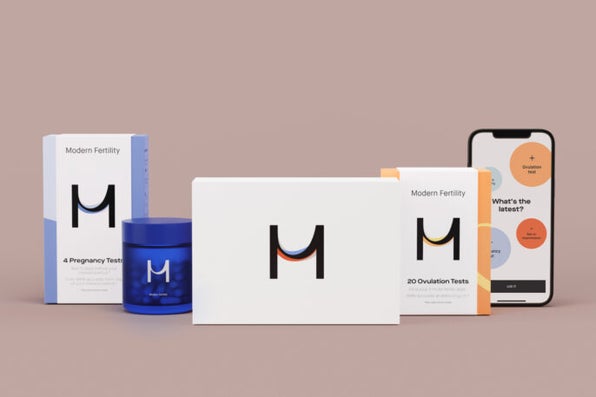
Ogwumike worked with Modern Fertility to provide its fertility tests—which measure seven hormones that influence fertility, including AMH, an indicator of ovarian reserve—to all WNBA players free of charge, along with access to additional consultation. Their partnership has also inspired a new campaign from Modern Fertility, which centers around the voices of formidable athletes like the WNBA’s Candace Parker and pro soccer player Sydney Leroux and seeks to catalyze a more candid discussion of reproductive health and fertility across pro sports.
Plenty of working women grapple with the delicate balance of family planning and career aspirations. But athletes rely almost entirely on their bodies for their careers, making decisions about their reproductive health especially fraught. “Having a family was super important to me,” says Parker, who had her first child at 23. “I was able to have my daughter at an early age and go through the grind of balancing being a mom, but also continuing to do what I love. I wouldn’t change it in any way, shape, or form—however, I think everybody’s journey is different.”
The implicit message to many athletes has been that they shouldn’t compromise their careers by having children too early—an idea often reinforced by public reactions to players who do get pregnant in the prime of their careers. “There is a huge stigma around being a mom and an athlete,” Leroux shared as part of Modern Fertility’s campaign. “When I first got pregnant, everyone said, ‘Oh, she’s going to retire.’” And while athletes are encouraged to track just about every aspect of their body and performance, fertility is often a black box for many of them. “You’re almost put in a position where you have to be forced to ask questions that you don’t know you should be asking,” Parker says. “That’s the challenge. You talk about fertility hormones, and people don’t know what that is or what that’s about until [they’re] going through the process.”
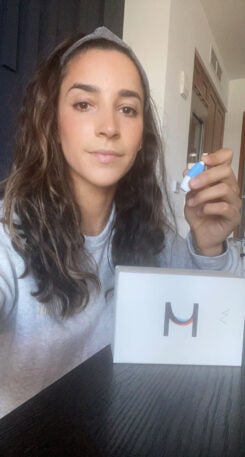
These are the types of experiences Modern Fertility hopes to elevate with its campaign, which launched today with an introductory video, and bears the tagline, “I refuse to let my fertility be a mystery.” Over the next month, the campaign will roll out testimonial accounts each week from Parker, Leroux, soccer player Kelley O’Hara, and retired gymnast Aly Raisman.

“The most powerful thing is us just getting out of the way,” says Modern Fertility cofounder Carly Leahy. “For us, from a brand standpoint, it’s just: Let’s support these amazing people in telling their stories and talking about how they’re thinking about this very complicated issue.”
The campaign is certainly a first for Modern Fertility in terms of scope—and a strategic one at that—but it’s also a microcosm of the knowledge gap the company has tried to tackle since its inception. “Athletes seem to embody almost the most extreme case of what we’ve been talking about with women day in and day out in our community, around needing more information to plan for their own future and life,” Leahy says. Modern Fertility, which was acquired for more than $225 million last year by digital health company Ro, has focused on what it calls the preconception space because fertility testing has not traditionally been accessible or affordable for most women, with costs crossing $1,000. The first time many people get any kind of fertility testing is after struggling to conceive. (Modern Fertility’s test retails for just $159 and requires only a finger prick.)
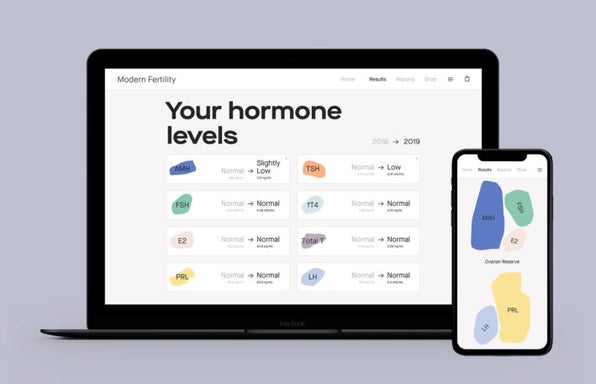
When people are empowered with this kind of information earlier in their lives, Leahy says, it gives them more choices, regardless of what their family planning might look like. “There’s no crystal ball for fertility—there’s no test that you can take that [says] ‘Yes, you’ll have a healthy baby tomorrow,’” Leahy says. “But women are smart, and they understand: If I check my cholesterol, it doesn’t tell me if I’m gonna have a heart attack tomorrow or not. It helps me understand where I am and helps me plan ahead.”

That’s not to say fertility tests are a complete solution, or that they can mitigate the effects of more systemic issues, from the dearth of affordable childcare options to the reality that women disproportionately shoulder caregiving when they do choose to have children. (There’s also some debate about how effective AMH and other hormones are as indicators for people who aren’t already dealing with infertility.) But since Modern Fertility distributed tests to WNBA players, Ogwumike says, conversations about fertility and family planning are already happening more frequently across the league. She’s already heard from players who want to get fertility tests for their partners, and others who want to understand how birth control might impact test results; Ogwumike herself had questions about how polycystic ovarian syndrome could impact her fertility and hormones.
“What I’ve learned most is there’s been a lot of fear mongering for women and their careers when it comes to fertility,” she says. “And when you’re given the resources that you need to make those decisions for yourself, it’s really not as scary or imminent as people make it seem. Everyone’s situation is different, but I think the lack of information has created fear.”
And while that pressure may be heightened within the realm of sports, Ogwumike knows that people across all kinds of industries and backgrounds face hurdles when it comes to navigating their reproductive health alongside their careers—and that seeing athletes speak out can help destigmatize the experience for all of them.
“When we signed our collective-bargaining agreement in 2020, the support that we got and the feedback that we got from women that were not even involved in sports was remarkable,” she says. “After having such a historic year, it was clear to us that we represent a lot of what women are going through—however unconventional our jobs are, we are also going through the same things.”


