


 Artificial Intelligence (AI) enabled organizations are an emerging reality. Transformation towards an AI-enabled organization requires the management to adopt “Change Management” and also adapt their Organizational Leadership styles in accordance with it in order to bring out the best results from the new systems and the talent that develops with it.
However, putting an effective AI system in place requires a talented AI team, managing the AI system’s implementation, and addressing the risks inherent in driving such a change program.
As Artificial Intelligence (AI) permeates into businesses small and large across industries, organizations are looking to hire experienced AI and Machine Learning (ML) talent. But, the pool of qualified resources is not always adequate given the difference in scope of Data Scientists and AI / ML resources. The big question regarding talent is, “what to look for when recruiting AI Talent?”
For a firm to develop an AI-enabled workforce, foster a supportive Organizational Culture, and steer an AI enablement effort there are 4 organizational elements that are essential:
- Management and Reporting Structure
- AI Training for Management
- Human Bias Removal
- Ability to Distinguish between Correlation and Causation
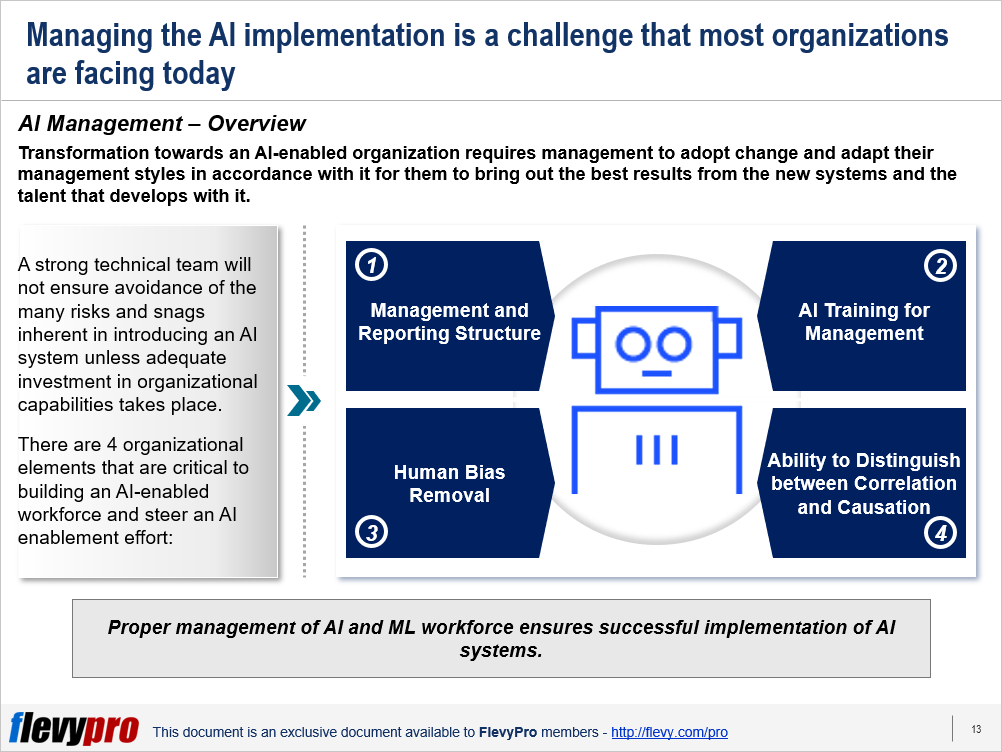 Let us probe a little deeper into a few of these elements.
Management and Reporting Structure
Organizational Design is one of key element to successful AI management. An effective management and reporting structure will adequately manage the risks arising out of using an AI system. Such a structure encompasses:
- Making appropriate Organizational Design decisions
- Buy-in in the AI system
- Effective top-down and bottom-up communication
- Clear planning regarding Change Management
AI Training for Management
Full backing of the AI system by the management has to be ensured for the system to take root across the organization. For this purpose, it is vital to:
- Understand the ability and scope of AI system by the management.
- Equip the senior management with abundant information.
- Top management has to own the change for it to be successful.
Human Bias Removal
Algorithms are designed by humans; choices made by biased human designers or within complex social systems can lead to outcomes in conflict with the organization’s goals and values. Effectively managing biases and risks can be the difference between useful output or otherwise. To avoid being trapped by bias and risks, leadership needs to work on the following imperatives:
- Senior managers need to closely monitor how their organization ingests, processes, and exports data.
- Systems should be proactively audited to make sure they serve the right purposes.
Assets such as technical expertise, business processes, data, and culture need prior investment for AI systems and workforce to be productive. These investments may look frivolous at the time but provide more value when AI skills are acquired more easily. A major portion of the business value of AI talent is reflected in these complementary assets.
Interested in learning more about AI-Enabled Workforce, what to look for while hiring, kind of training needed for the workforce, and other investments absolutely necessary for AI enablement?” “You can download an editable PowerPoint on AI-Enabled Workforce here on the Flevy documents marketplace.
Are you a Management Consultant?
You can download this and hundreds of other consulting frameworks and consulting training guides from the FlevyPro library.


